Evaluating the 3D Butterfly SVG for Creative Projects
When selecting digital assets for a design project, the tension between visual richness and technical efficiency is constant. The 3D Butterfly SVG occupies a unique space in this balance, promising the depth and realism of three-dimensional graphics while retaining the lightweight, infinitely scalable nature of vector files. However, not every project benefits equally from this format. This article offers a practical evaluation of the 3D Butterfly SVG, examining its strengths, limitations, and ideal use cases to help you determine whether it aligns with your specific goals and workflow.
What Is a 3D Butterfly SVG?
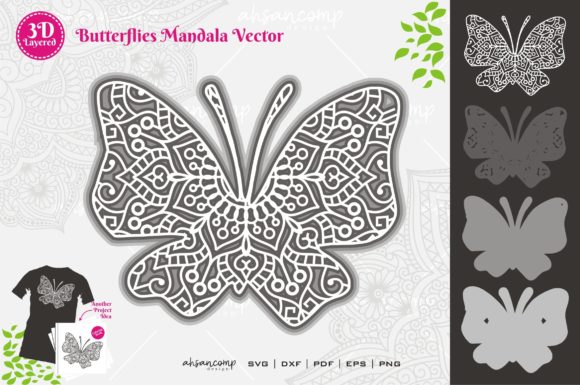
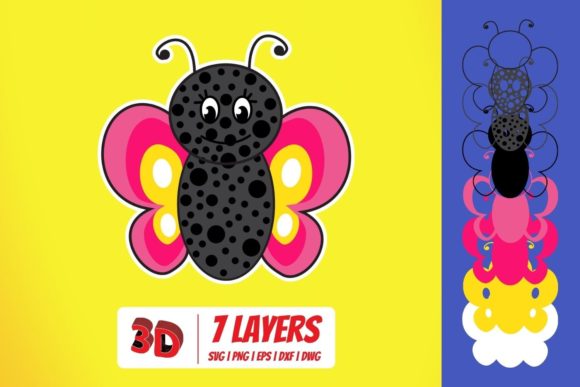
A 3D Butterfly SVG is a vector graphic that simulates depth, volume, and perspective through advanced design techniques. Unlike a flat silhouette or a simple icon, these files use layered paths, gradient fills, opacity masks, and strategic shadowing to mimic the appearance of a three-dimensional object. It is important to understand what this format is not: it is not a true 3D model. You cannot rotate a 3D Butterfly SVG in three-dimensional space or view it from different angles. It is a fixed-perspective illusion crafted entirely within the constraints of 2D vector coordinates. Recognizing this distinction is the first step in evaluating whether it fits your project.
Why Designers and Hobbyists Seek It Out
The appeal of a 3D Butterfly SVG stems from its ability to deliver a premium, polished aesthetic without the heavy resource demands of rasterized 3D renders. For web designers, it offers a way to incorporate realistic visuals that scale cleanly across devices. For print creators, it provides sharp, detailed artwork that remains crisp at any dimension. Hobbyists in laser cutting and digital scrapbooking value the ready-made depth these files bring to their projects. The core motivation is consistent: the desire for visual impact that goes beyond flat design, delivered in a practical, editable vector format.
Weighing the Benefits Against the Tradeoffs
Choosing a 3D Butterfly SVG requires a clear-eyed assessment of what you gain and what you may need to compromise on. Below are the key evaluation points.
Visual Depth vs. Stylistic Cohesion
The most obvious benefit is the enhanced realism. The layered gradients and shadows in a well-made 3D Butterfly SVG create a striking visual effect that can elevate a hero banner or a product label. However, this richness can clash with certain design contexts. If your overall interface or brand uses flat, minimalist aesthetics, a highly realistic 3D butterfly may feel out of place. Evaluate whether the depth effect complements your existing visual language or competes with it.
Scalability vs. Rendering Complexity
SVGs are resolution-independent, meaning a 3D Butterfly SVG will look sharp on a retina display and a billboard alike. This is a significant advantage over raster images. Yet, the complexity required to create the 3D illusion often results in a file with a high node count and intricate path data. While the file size on disk may remain modest, the browser or rendering software must work harder to parse and paint the graphic. On older devices or in resource-constrained environments, this can lead to slower page loads or janky rendering. Testing the file in your specific deployment environment is essential.
Customizability vs. Editability Constraints
One of the stated advantages of SVG is that it is editable. A 3D Butterfly SVG is technically editable, but the degree of difficulty varies greatly. A simple drop-shadow effect is easy to tweak. A complex multi-layered design with interdependent shading is fragile. Changing the color of one wing might require adjusting several overlapping elements to preserve the depth illusion. If you plan to heavily customize the asset, look for files with well-organized layers and descriptive group names. Otherwise, you may find that the 3D effect is brittle and easily broken by seemingly minor edits.
Lightweight File Size vs. Browser Inconsistency
Compared to a PNG or JPEG of a similar visual quality, a 3D Butterfly SVG is remarkably lightweight. This is a genuine benefit for web performance. The tradeoff is that SVG rendering is not perfectly uniform across all browsers. Gradients, opacity masks, and filter effects may display differently in Chrome, Safari, Firefox, or Edge. A 3D effect that looks flawless in one browser can appear flat or misaligned in another. If cross-browser consistency is critical for your audience, you must either simplify the design or be prepared to test and provide fallbacks.
Scenarios Where a 3D Butterfly SVG Excels
Understanding where this asset performs best helps in making an informed choice.
- Hero Sections and Landing Pages: When you need an immediate visual focal point, a 3D Butterfly SVG adds depth and professionalism that flat vectors cannot match. It loads faster than a raster alternative and scales perfectly.
- Laser Cutting and Engraving: The layered structure of a 3D Butterfly SVG translates directly into physical depth. Different shading layers can be assigned different cut depths, making it ideal for decorative panels, jewelry, or signage.
- Premium Print Materials: For brochures, magazine covers, or high-end packaging, the vector format ensures sharp, crisp output at any print size, while the 3D effect adds a tactile sense of quality.
- Digital Stationery and Scrapbooking: Hobbyists benefit from the ready-made realism. A 3D Butterfly SVG provides a professional-looking element that can be resized and recolored to fit personal projects without starting from scratch.
When Alternatives May Be a Better Fit
There are clear situations where choosing a different format is the more practical decision.
- Interactive 3D Experiences: If you need a butterfly that users can rotate, zoom into, or view from multiple angles, a 3D Butterfly SVG will not suffice. You need a true 3D model format such as OBJ, GLTF, or a WebGL-based solution. The SVG is a fixed perspective and cannot provide this level of interaction.
- Minimalist or Performance-Critical Interfaces: For apps or websites where every millisecond of load time matters, a simple flat SVG icon will always outperform a complex 3D variant. The extra visual depth is not worth the rendering overhead if speed is your primary metric.
- Complex Animation Requirements: While SVGs can be animated using CSS or JavaScript, animating a 3D Butterfly SVG with realistic wing flapping is technically challenging and can result in performance issues. A true 3D model rigged for animation in a dedicated tool will yield smoother and more natural motion.
- Budget or Time Constraints: High-quality 3D Butterfly SVG files from reputable sources often come at a premium price. Free versions may have messy code or restrictive licenses. If you need a quick, low-cost solution, a high-resolution stock photo or a flat vector icon may be more accessible and reliable.
Practical Decision-Making Insights
To determine whether a 3D Butterfly SVG is right for you, consider these actionable steps. First, audit the technical environment where the asset will be used. Are your users on modern browsers and fast connections, or is the audience using older devices? Second, assess your own skill level with vector editing. If you need to make significant modifications, invest time in learning how layered SVGs are constructed, or choose a file with simpler, well-documented layers. Third, evaluate the source carefully. Look for files that include multiple format exports, cleanly named groups, and positive reviews regarding cross-platform compatibility. Finally, always test the asset in context before committing to a large-scale deployment. A quick test in your target browser or application can reveal rendering issues that are not visible in the preview.
The 3D Butterfly SVG is a specialized tool rather than a universal solution. It delivers impressive visual depth and scalability when used appropriately, but it demands careful consideration of rendering performance, editability, and stylistic fit. By weighing these factors against your specific project requirements, you can decide whether this format will enhance your work or introduce unnecessary complexity. For projects where a polished, realistic vector element adds clear value, the 3D Butterfly SVG is a strong and practical choice.